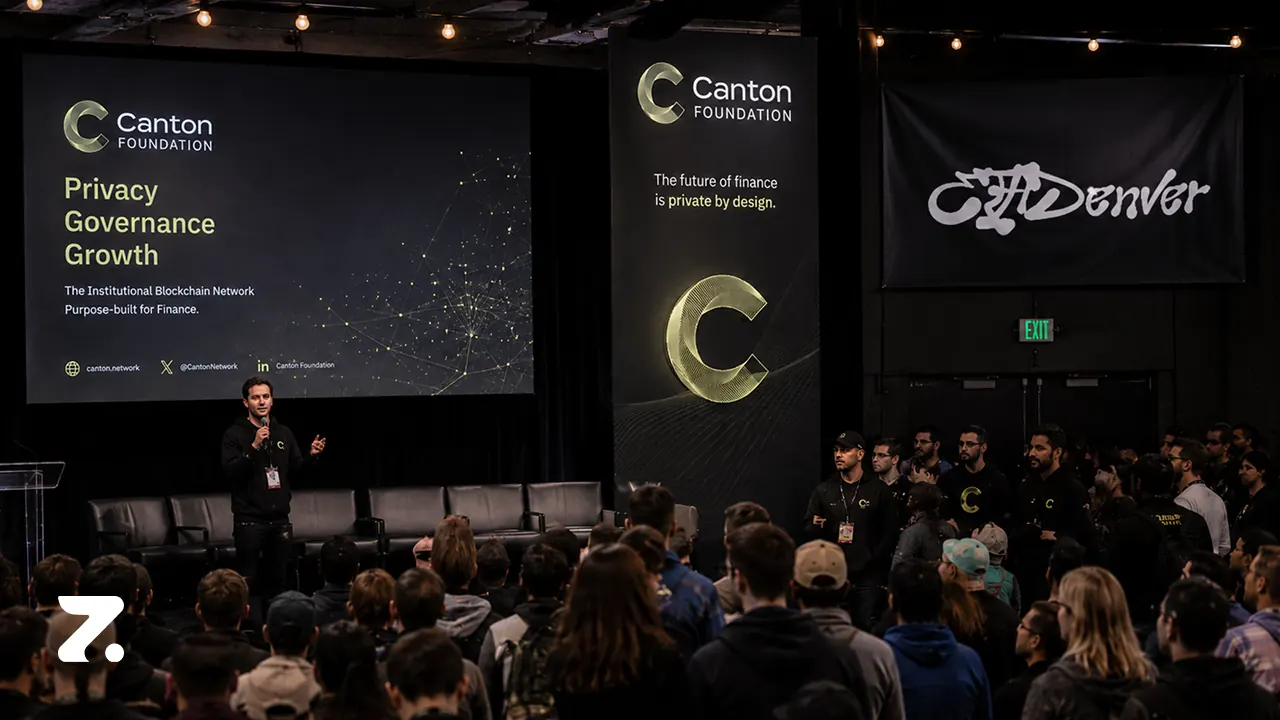
Canton Network Explained: Privacy-First Blockchain for Builders
Canton Network is built for privacy-first blockchain applications, giving institutions and developers selective data visibility, stronger compliance, and a new path for serious Web3 building.

Genzio
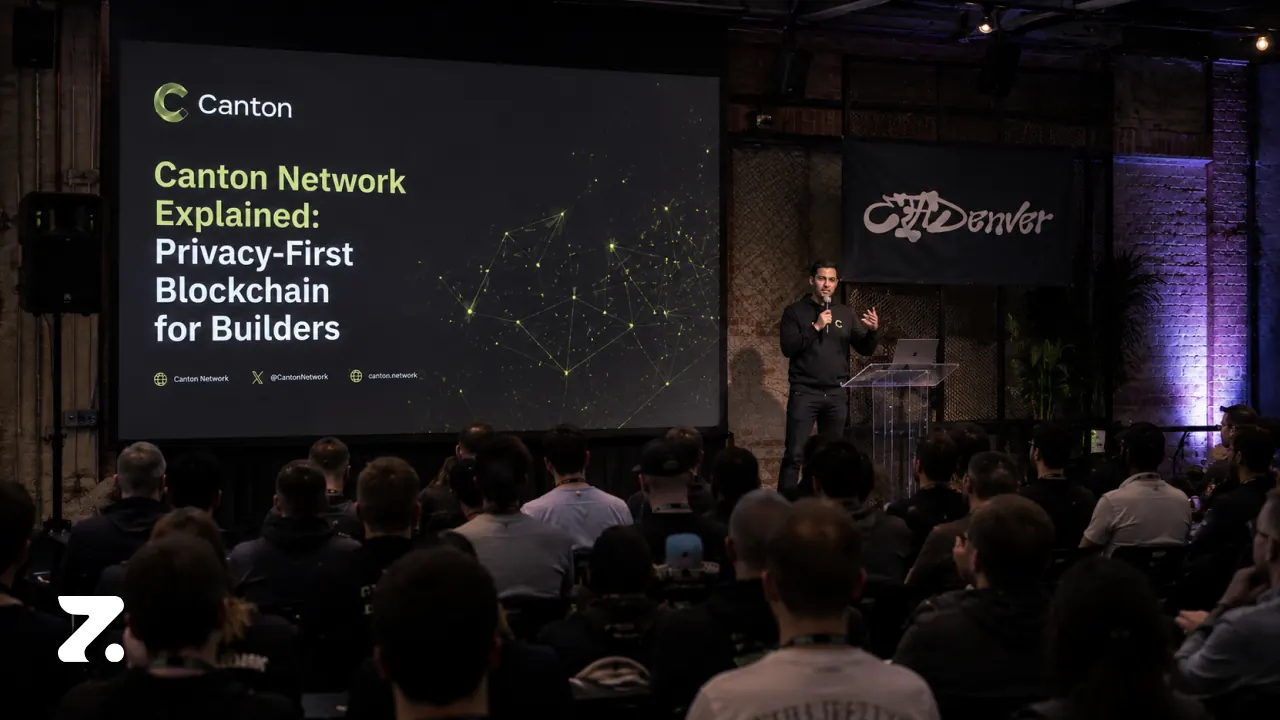
Canton Network Explained: Privacy-First Blockchain for Builders
Canton Network is gaining attention for one big reason: it is built around privacy, not public-by-default transparency. For institutions, that distinction matters. For developers, it creates a new kind of blockchain environment where selective disclosure, compliance, and real-world workflows can be designed into the application from the start.
In a market often driven by hype, Canton stands out by focusing on utility. Its model is designed for financial institutions, enterprise teams, and builders who want to create privacy-preserving applications without forcing sensitive data onto a public chain.
If you want a broader view of how blockchain conversations are evolving across the industry, explore finance-focused coverage and major event insights that track where the ecosystem is heading.
What Is Canton Network?
Canton is a blockchain network designed for privacy-first applications, especially in regulated and institutional settings. Instead of making all data visible to everyone, it allows builders to control who can see what at the workflow level.
That makes it especially relevant for use cases like private invoicing, settlements, and sensitive-data coordination. It is also a strong fit for teams that need blockchain infrastructure without sacrificing confidentiality.
Why Canton Takes a Privacy-First Approach
Most public blockchains assume transparency as a default. Canton flips that assumption. Its architecture is built so that privacy is part of the application logic, not an afterthought.
Builders can define selective visibility rules.
Institutions can share only the data that is necessary.
Private workflows can still operate on-chain without exposing everything.
This is especially important for regulated industries where confidentiality and compliance are non-negotiable. If you are exploring how this kind of approach fits into broader tech trends, see more technology and AI news coverage for adjacent innovation stories.
How Canton’s Smart Contract Model Works
Canton uses a smart contract language referred to as Tamal in this context. The key idea is simple: developers can define exactly which participants can access which parts of a transaction or workflow.
That gives builders a way to design privacy directly into the contract itself. Instead of relying on the chain to hide data after the fact, the application decides what should be shared from the outset.
Why Canton Is Not EVM-Based
Canton was not built to copy Ethereum. Its architecture was created for a different purpose: institutional-grade privacy and selective disclosure. That is why it uses its own stack rather than leaning on EVM compatibility first.
The network’s design philosophy reflects a broader truth about blockchain adoption: one stack does not fit every use case. Sometimes, a specialized architecture is the better choice when the problem requires confidentiality, compliance, and control.
For readers interested in the culture behind builder-first ecosystems, culture coverage often highlights how teams think, build, and adopt new tools.
Institutional Use Cases for Canton
Canton is especially relevant for institutions that need to exchange sensitive information without exposing it widely. That includes banks, financial firms, and enterprise teams handling regulated or confidential data.
Private invoicing for institutions
Confidential settlement workflows
Privacy-preserving financial coordination
Health and biometric data sharing with restricted access
These are the kinds of use cases where “trust me, it won’t leak” is not enough. The system has to be designed so only the right parties can see the right information.
Why Builders Are Paying Attention
One of Canton’s biggest signals is developer interest. Even though the network uses a different language and a different way of thinking about on-chain privacy, builders are still showing up to test it.
That matters because developer adoption is the real test of whether a new chain can grow. Builders are willing to learn new tools when the problem is worth solving and the ecosystem feels serious.
New tooling can attract serious technical builders.
Hackathons provide real proof of ecosystem momentum.
Privacy-first infrastructure creates clear product-market fit.
For a closer look at how conference-driven builder ecosystems grow, visit events coverage for more on live community momentum.
Hackathons as a Signal of Ecosystem Momentum
Hackathons are more than competitions. They are a stress test for onboarding, tooling, and developer interest. If teams can build quickly under time pressure, that is a strong sign the ecosystem is becoming usable.
In Canton’s case, early hackathon traction suggests that developers are willing to experiment with a new language and a different architecture when the privacy story is strong enough.
Developer Support Matters More Than Hype
Long-term blockchain growth depends on more than token price. It depends on documentation, tooling, responsiveness, and real builder support. That is why developer relations plays such a critical role in ecosystems like Canton.
The best networks do not just attract attention. They help builders ship.
If you want to explore more network strategy and builder-led growth content, the main Genzio Media homepage offers a simple place to discover related stories.
Final Takeaway
Canton Network is positioning itself as a privacy-first blockchain for institutions and serious builders. Its selective disclosure model, custom smart contract approach, and focus on real-world workflows make it stand out in a crowded Web3 landscape.
For developers, it is a chance to build on a network where privacy is designed in. For institutions, it offers a path to blockchain adoption without exposing sensitive data publicly. That combination is what makes Canton worth watching.
FAQ
What is Canton Network used for?
Canton Network is used for privacy-first blockchain applications, especially in institutional and enterprise settings where sensitive data must be shared selectively.
Is Canton Network an EVM chain?
No. Canton uses its own architecture and tooling instead of being built around the Ethereum Virtual Machine.
Why do developers build on Canton?
Developers build on Canton because it offers a clear privacy use case, especially for regulated workflows that need selective disclosure.
What makes Canton different from public blockchains?
Canton is designed so privacy is built into the application logic. Public blockchains usually prioritize transparency, which can be a problem for institutions.
About

Featured Posts




Explore Topics