Filecoin Explained: Decentralized Storage for AI and Data
Filecoin is positioning decentralized storage as a trust layer for AI, data provenance, and user-owned infrastructure. Here’s why that matters now.

Genzio
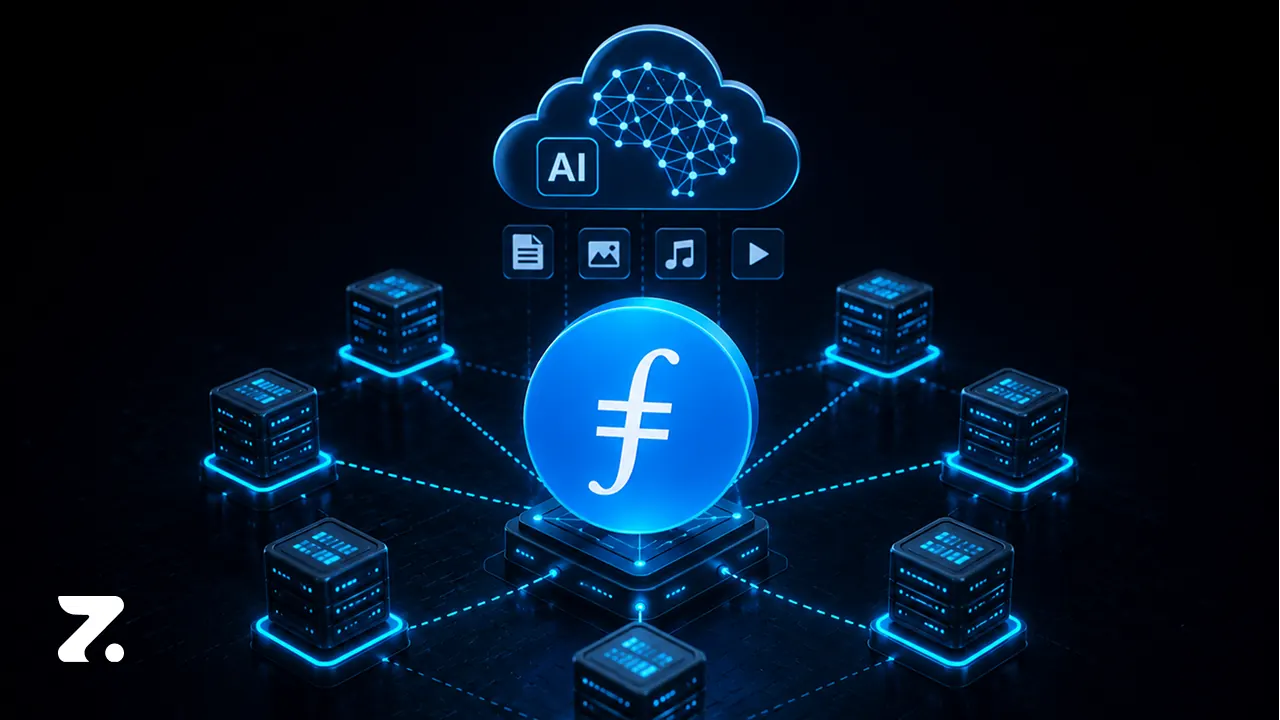
Filecoin Explained: Decentralized Storage for AI and Data
At Ethereum Denver, Clara Tsao described a market that feels more serious, more practical, and more focused on real utility than hype. That shift matters because it mirrors what Filecoin is built for: infrastructure that solves real problems around storage, ownership, and trust.
Filecoin is no longer just a story about archival data. It is increasingly being framed as a core layer for AI, data provenance, and user-controlled storage. In a world where agents, models, and platforms depend on massive amounts of data, the question is no longer just where data lives. It is who controls it, how it is verified, and whether it can move freely.
For readers exploring the broader decentralized data stack, Genzio Media has been tracking how storage, AI, and ownership are converging across the ecosystem.
Learn more about the broader ecosystem on Genzio Media, explore related coverage in our AI News section, and see how infrastructure stories connect across our full category hub.
What Filecoin Is and Why It Matters
Filecoin is a decentralized storage network that lets users store and retrieve data through an open marketplace instead of relying on a single cloud provider. Its native token, FIL, powers payments and incentives across the network.
The core idea is simple: storage should be portable, verifiable, and not locked inside one company’s system. That makes Filecoin especially relevant as businesses and developers look for alternatives to centralized cloud dependence.
Users choose where data is stored.
Storage providers compete to offer capacity.
Cryptographic proofs help verify that storage is being delivered as promised.
For technical readers, the official Filecoin documentation is the best place to understand how the network works in practice.
Why AI Makes Decentralized Storage More Important
Clara Tsao’s key point is that crypto is becoming a critical layer for AI trust. As AI systems scale, they need a memory layer, a storage layer, and a way to verify where data came from. That is where decentralized infrastructure becomes valuable.
AI is creating new pressure on data systems in three ways:
Provenance: teams need to know where data originated.
Integrity: they need to know whether it has been altered.
Access: machine consumers may need authenticated, pay-per-use retrieval.
This is why Filecoin is increasingly discussed as AI infrastructure, not just a Web3 storage alternative. The network can support datasets, AI memory, and retrieval workflows that need more transparency than opaque cloud systems typically provide.
Industry coverage from CoinDesk’s crypto market reporting and The Block’s infrastructure coverage has also reflected this broader AI-and-crypto convergence.
Data Ownership and Sovereignty Are the Real Value
One of the strongest arguments for Filecoin is user control. In centralized systems, data often becomes trapped behind subscriptions, platform rules, and migration costs. Users may pay recurring fees without truly owning the storage layer.
Filecoin offers a different model. It gives users more choice over where data is stored, how it is retrieved, and how portable it remains over time. That matters for creators, businesses, and institutions that want to avoid vendor lock-in.
Common pain points in centralized storage include:
High egress fees when moving data
Difficulty migrating between providers
Limited visibility into where data is physically stored
Dependence on a single platform’s rules and pricing
For a broader look at related infrastructure themes, Genzio Media’s Finance coverage often explores how ownership, cost, and control shape digital systems.
How Filecoin Supports Data Provenance
Data provenance is becoming essential as AI-generated content, synthetic media, and automated workflows grow. Provenance means being able to answer basic but important questions: Where did this data come from? Has it changed? Can it be audited?
Filecoin’s architecture is designed around verifiable storage, which helps support those questions. That is useful not only for AI teams, but also for media, research, compliance, and digital asset workflows.
Examples of where provenance matters include:
Training data for AI models
Digital art and content authenticity
Scientific and biotech datasets
Archival records and historical media
As more systems rely on automated decisions, the ability to verify source data becomes a trust requirement rather than a nice-to-have.
Filecoin Is Expanding Beyond Archival Storage
Filecoin first became known for long-term archival storage, but the ecosystem has been moving into faster retrieval and more active use cases. That shift is important because modern applications need more than cold storage.
Today, decentralized storage can support:
Archival storage for long-term retention
Warm storage for frequently accessed data
Hot storage for active application workflows
This expansion makes Filecoin more relevant for real products, not just preservation. It can support NFT metadata, consumer photos, content libraries, AI datasets, and other data that needs to stay accessible and reliable.
To understand the broader decentralized data stack, it helps to look at IPFS, which is closely tied to Filecoin’s ecosystem and content-addressed storage model.
How the Filecoin Marketplace Works
Filecoin operates as a two-sided marketplace. Storage providers supply capacity, while users and applications buy storage or retrieval services. That structure creates competition, resilience, and flexibility.
Clara Tsao emphasized that the ecosystem includes both small operators and enterprise-scale providers. In other words, Filecoin is not only for large data centers. It can also include smaller participants who want to contribute storage and earn revenue.
Small and large storage providers can participate
Users choose the storage model that fits their needs
The network can support different performance and cost profiles
For builders who want a deeper technical view, the Protocol Labs ecosystem site provides additional context on the broader infrastructure stack.
AI Agents Are Changing the Storage Conversation
One of the most forward-looking ideas in the conversation is that AI agents may become major consumers of data. That means storage systems need to serve not only humans, but also autonomous software that reads, pays for, and moves data on its own.
This creates a new kind of infrastructure demand:
Machine-readable content formats
Authenticated access to data
Payment rails for agent-to-agent exchange
Reliable storage for automated workflows
In that future, data starts to behave more like currency. Agents may need to send files to one another, verify sources, and retrieve information in real time. Filecoin’s model fits that direction because it treats storage as a programmable service rather than a static product.
Why Filecoin Stands Out Now
Filecoin stands out because it combines three things that are becoming more valuable at the same time: storage, verification, and ownership. That combination is especially relevant as AI systems become more powerful and more data-hungry.
The strongest reasons to watch Filecoin are:
It supports user-owned storage instead of platform lock-in
It adds verifiability to data infrastructure
It is expanding into active AI and retrieval use cases
It fits a future where agents, not just people, consume data
For Genzio Media readers, the bigger story is not just Filecoin itself. It is the broader shift toward infrastructure that is open, auditable, and built for the next generation of AI systems.
FAQ
What is Filecoin in simple terms?
Filecoin is a decentralized storage network that lets people and apps store data through an open marketplace instead of relying on one cloud provider.
Why is Filecoin relevant to AI?
AI systems need trustworthy data, storage, and provenance. Filecoin helps support those needs by making storage more verifiable and portable.
Is Filecoin only for long-term archival storage?
No. The ecosystem is expanding into warm and hot storage use cases, which makes it more useful for active applications and AI workflows.
What problem does Filecoin solve for users?
It helps reduce vendor lock-in, improve data portability, and give users more control over where their data is stored and how it is accessed.
About

Featured Posts




Explore Topics