Why Brazil Is Cracking Down on Prediction Markets Now
Brazil's move to ban prediction markets on elections and sports marks a sharp regulatory shift. The crackdown targets over 100 platforms and raises questions about free markets and fraud risks.

Genzio
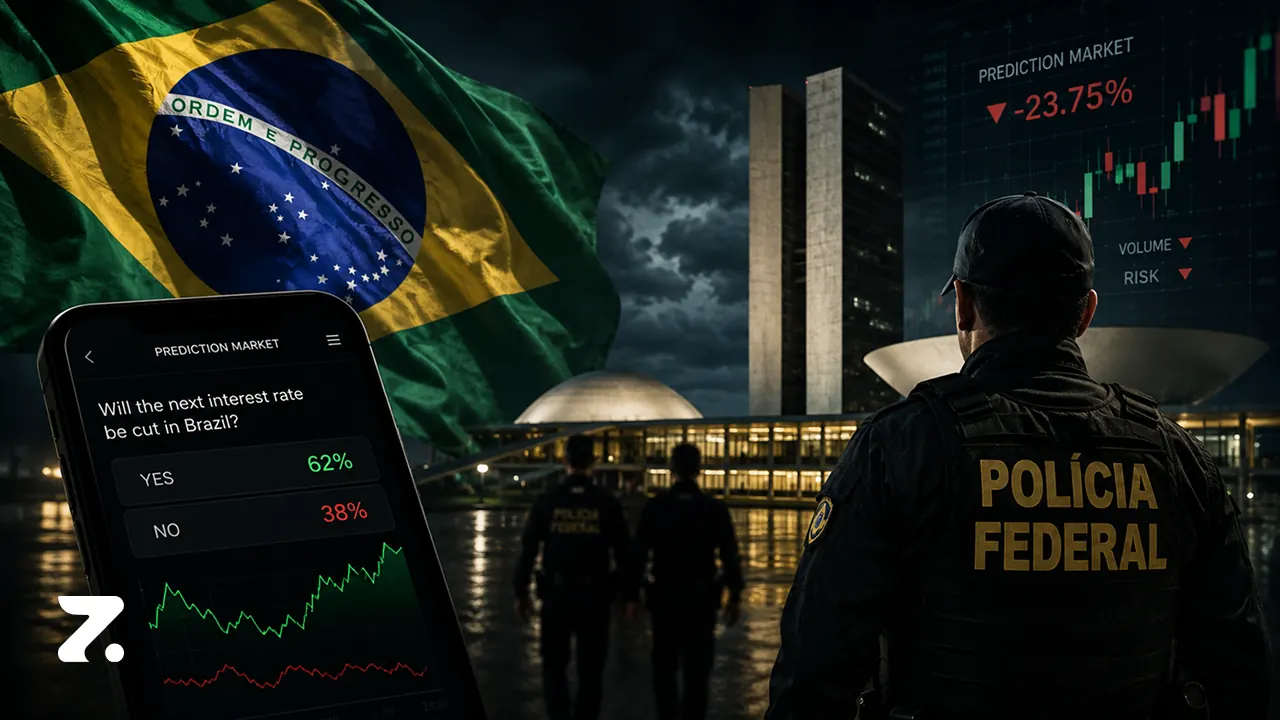
Why Brazil Is Cracking Down on Prediction Markets Now
Question: can markets that trade on the odds of an election outcome be tolerated the same way we tolerate sports betting? Brazil's recent push to ban prediction markets tied to elections and sporting events forces that debate into the open.
In a bold regulatory sprint, authorities are targeting a booming practice that regulators worldwide have treated uneasily. For broader industry context, see analysis on Genzio.
I believe this move is more political than protective: it conflates legitimate risk-transfer mechanisms with manipulative gambling that could distort democratic processes.
What regulators say — and what they miss
Officials argue prediction markets amplify misinformation, create incentives for market manipulation, and can influence voter behavior. Those concerns are legitimate, especially around sensitive periods like election season. But the enforcement approach risks collateral damage: many platforms are used by researchers, journalists and pollsters to aggregate information.
Real-world example: in the United States, PredictIt was subject to lengthy regulatory scrutiny that led to operational limits and market closures. Early reporting captured parts of that process: news report.
Market scale and measurable risks
Regulators cite rapid growth: analysts estimate there are over 100 platforms globally offering event-based markets, with some reporting year-over-year volume growth around 30% in certain regions. Concrete numbers matter: when a single market can attract tens of thousands of bets and handle millions of reals in turnover, the systemic and reputational stakes rise.
Comparison: unlike regulated sportsbooks that operate under strict licensing and consumer protections, many prediction markets run in a grey area—closer in structure to financial exchanges than to traditional gambling sites. That hybrid nature complicates the policy response. For a perspective on regulatory patterns, see this coverage: news coverage.
Why a blanket ban is blunt
A blanket ban eliminates both harmful and harmless activity. It removes a data source that can improve forecast quality for elections and public health modeling. It also pushes activity underground or offshore, making it harder to monitor and more susceptible to fraud — the opposite of what regulators claim they want.
Pros of regulation: transparency rules, user identity verification, position limits, and mandatory reporting could reduce manipulation without killing innovation.
Cons of prohibition: loss of useful aggregation of dispersed information and potential migration to unregulated venues.
Policy design that preserves useful signals while limiting harms could be informed by cross-border examples. See another report here: related reporting.
Political context and timing
Timing matters. Introducing a ban in a heated election cycle raises questions about intent and proportionality. A neutral, evidence-driven regime would set clear definitions about what constitutes a prediction market, require auditability, and create penalties proportional to demonstrated harms.
From a market design standpoint, a tiered approach makes sense: small academic or experimental markets could be exempted or lightly regulated, while large for-profit platforms should face licensing, capital requirements, and consumer safeguards. For how industry stakeholders react, consult industry summaries on Genzio Media.
What this means for stakeholders
Operators will either seek relocation, adopt stricter compliance, or close. Users and data consumers lose a forecasting signal. Regulators gain immediate control but may sow distrust among fintech innovators. Firms like Genzio that monitor regulatory trends should track enforcement patterns and consider advocacy for proportionate rules that protect voters without obliterating information markets.
Further coverage of market shifts can be found here: additional coverage.
FAQ
Q: Are all prediction markets being banned?
A: The current proposal targets markets tied to elections and sporting events; other kinds of prediction markets may be evaluated separately but face increased scrutiny.
Q: Will this stop manipulation?
A: A ban could reduce visible manipulation domestically but may push activity offshore where oversight is weaker, potentially increasing the risk.
Q: How could regulators do this better?
A: Implement targeted rules: registration, audit trails, staking limits, and transparency requirements rather than a blanket prohibition.
Q: Does this affect academic research?
A: Yes; without carve-outs, scholars who use small experimental markets for research may face new barriers or legal uncertainty.
Final take: Brazil's crackdown highlights a global puzzle — how to balance free information aggregation with integrity and public trust. A measured, transparent regulatory framework would preserve useful signals while addressing the risks. A blunt ban, in my view, is likely to be counterproductive.
About

Featured Posts



Explore Topics