How Aomi Labs Is Building AI Infrastructure for EVM Chains
Cecilia Zang explains how Aomi Labs is building AI infrastructure for EVM chains, focusing on automation, non-custodial execution, and safer Web3 UX.

Genzio
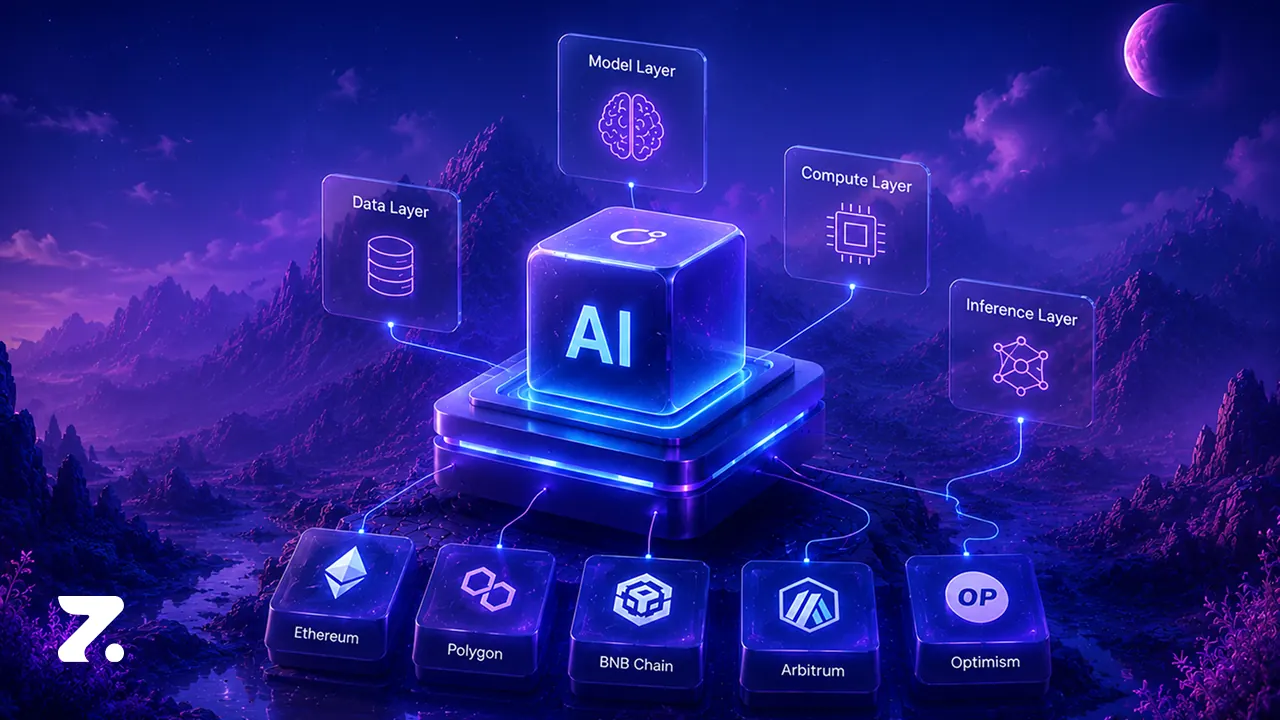
How Aomi Labs Is Building AI Infrastructure for EVM Chains
Cecilia Zang, founder of Aomi Labs, is building a different kind of AI product for Web3: not a chatbot, not a token pitch, but infrastructure that can execute real on-chain actions across EVM chains. Her thesis is simple. If AI is going to matter in crypto, it should reduce friction, improve reliability, and help users complete transactions safely.
That view reflects a broader shift in the market. As Ethereum and the wider EVM ecosystem continue to attract builders, the most credible AI products are moving away from vague branding and toward practical automation. For more context on the ecosystem, see Ethereum’s official documentation and OpenAI’s platform overview.
Cecilia Zang and the Founding Story of Aomi Labs
Cecilia’s background is deeply technical. She started her crypto career as an engineer working on EVM-related systems, layer-2 infrastructure, block building, and interoperability. That experience shaped how she thinks about product design: the hard part is not the interface, but the execution layer underneath it.
At Genzio Media’s AI News coverage, we often see founders describe AI as a layer on top of existing workflows. Cecilia’s path is similar, but more specific. She is applying AI to the mechanics of blockchain execution itself.
The Origin of the Aomi Labs Idea
The idea for Aomi Labs emerged when Cecilia started using AI tools that could take actions through operating-system primitives. That led her to a question: if AI can call tools on a computer, why can’t it do the same on Ethereum?
In her view, EVM execution already resembles a structured environment where state, storage, and contract calls can be treated like programmable primitives. That insight became the foundation for Aomi Labs, which is designed to turn user intent into on-chain execution. For a useful reference point on AI tool use, OpenAI remains one of the clearest examples of how function calling and tool use have shaped modern AI software.
What Aomi Labs Actually Builds
Aomi Labs is building AI infrastructure for generic EVM transactions. That includes actions like swapping assets, claiming tokens, and interacting with smart contracts. The goal is not to create a novelty assistant that talks about crypto. The goal is to execute real tasks across supported chains.
This matters because Web3 users often face too many steps before they can do something simple. Aomi’s approach is intent-driven: the user states the outcome, and the system handles the execution path. Learn more about the broader ecosystem through Genzio Media’s Finance section, where infrastructure and crypto business models are covered in more depth.
The Technical Moat: Execution Quality Over Branding
Cecilia is skeptical of products that rely on hype instead of engineering. For her, the moat is not the label “AI agent.” It is execution quality: how fast the system fetches state, how accurately it encodes and decodes ABI data, and how reliably it builds deterministic transactions.
That focus on precision is important in EVM environments, where small mistakes can lead to failed transactions or poor user experiences. Aomi Labs is trying to solve the reliability problem first, because automation only works when the output is trustworthy.
For readers interested in wallet safety and signing risk, Ledger’s security resources offer a helpful lens on why non-custodial design matters.
Why Cecilia Zang Rejects the “Crypto x AI” Hype Narrative
Cecilia believes crypto is highly narrative-driven, and AI has become the latest buzzword attached to it. But she does not think that automatically creates value. In her view, AI’s real contribution to crypto is automation: making on-chain actions easier, faster, and less manual.
That is a more grounded thesis than simply combining two popular categories. It also aligns with a growing trend in the market, where builders are moving away from broad claims and toward task-specific tools. For a company-level example of this shift, see Coinbase, which has been experimenting with AI and infrastructure-oriented product ideas.
Why She Prefers “Software” Over “Agents”
Cecilia also pushes back on the word “agents.” She prefers to describe Aomi Labs as software or processes with embedded capabilities. That distinction may sound semantic, but it reflects a deeper product philosophy: deterministic systems are easier to trust than romanticized autonomous entities.
In Web3, that framing is especially important. Users need to know what a system can do, what it cannot do, and how it will behave before they sign anything. That is why Aomi Labs emphasizes bounded execution rather than open-ended autonomy.
How the Product Works in Practice
At ETH Denver, Aomi Labs showcased a Telegram bot that demonstrates its execution flow. The user connects a wallet, requests an action, and the system prepares the transaction. Before signing, the user can simulate the transaction and review what will happen.
That non-custodial design is a major part of the product story. Cecilia is explicitly against forcing users to deposit funds into a custodial wallet just to use an AI tool. Instead, Aomi Labs aims to keep users in control while still making the experience simpler.
Connect a wallet without giving up custody
Request an action in plain language
Review a simulation before signing
Execute swaps, claims, or contract interactions
For more on product and ecosystem coverage, visit Genzio Media’s Events section and Culture coverage, where founder perspectives and broader Web3 behavior are often explored.
AI, Wallets, and the Future of Web3 UX
Cecilia’s bigger point is that AI should make Web3 software more usable. The future is likely to be intent-driven, with users asking for outcomes instead of navigating complex interfaces. But that future only works if the underlying execution is secure, previewable, and reliable.
That is why simulation, non-custodial flows, and deterministic behavior are becoming standard expectations. The best AI products in crypto will not just sound smart. They will help users complete real tasks with less friction.
ETH Denver and the Pressure to Ship
Aomi Labs came to ETH Denver with a clear goal: launch something real. Cecilia described the moment as one of pressure, but also one of clarity. In a market crowded with token-first narratives, shipping a product is a stronger signal than talking about one.
That mindset is part of what makes Aomi Labs interesting. It is not trying to win with branding alone. It is trying to prove that AI infrastructure can make EVM interactions safer, faster, and more useful.
What Aomi Labs Signals About the Future of AI in Crypto
Aomi Labs represents a broader direction for the industry. The most credible AI-in-crypto products are likely to be infrastructure or workflow tools, not vague agent brands. EVM remains the most practical environment for this kind of automation, and security will remain central as more users delegate execution to software.
For Genzio Media, Cecilia Zang’s perspective is a useful reminder that the future of AI in Web3 may be less about hype and more about execution. If the product can reduce friction, protect users, and deliver reliable outcomes, it has a real chance to matter.
FAQ
What is Aomi Labs building?
Aomi Labs is building AI infrastructure for EVM chains that can execute generic on-chain actions such as swaps, claims, and smart contract interactions.
Why does Cecilia Zang reject the term “agents”?
She prefers to describe the system as software or processes because that framing is more deterministic, more precise, and easier to trust in blockchain environments.
How does Aomi Labs improve wallet safety?
The product keeps users non-custodial and includes transaction simulation before signing, which helps reduce mistakes and unexpected outcomes.
Why is this relevant to the future of Web3?
It shows how AI can make blockchain actions easier without relying on hype, token-first narratives, or custodial shortcuts.
About

Featured Posts



Explore Topics