The $40 Billion Graveyard: Crypto’s Missing M&A Layer
Merger Labs is building token merger infrastructure to solve crypto fragmentation, enabling seamless on-chain consolidation and giving projects a new path to grow or exit.

Genzio
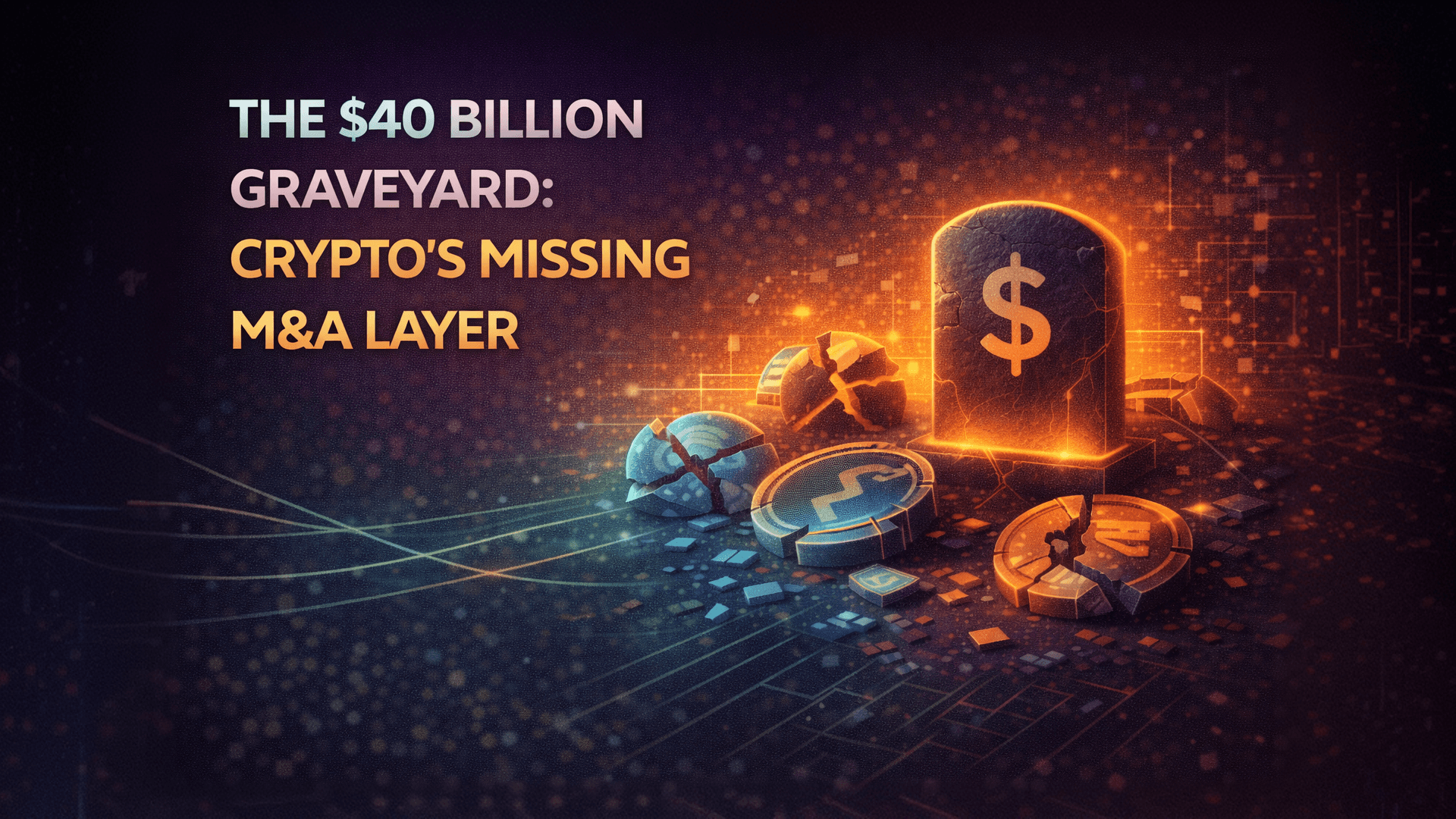
The $40 Billion Graveyard: Crypto’s Missing M&A Layer
Crypto has no shortage of innovation, but it still lacks one very basic market mechanism: a clean way for projects to merge. That gap is exactly what Merger Labs is trying to solve with its token merger protocol, a system designed to bring mergers and acquisitions on-chain.
At ETH Denver, founder and CEO Graham Bode described the problem clearly: crypto is fragmented, crowded, and difficult to navigate. With millions of tokens in circulation, many projects struggle to stand out, and users are left sorting through an overwhelming number of options. The result is a market that launches easily but rarely consolidates.
For more coverage on emerging market structure ideas in crypto, see Genzio Media’s finance coverage and the latest from our AI news section. You can also explore all Genzio Media categories for related stories.
Why Token Mergers Matter
In traditional finance, mergers and acquisitions help stronger companies expand, absorb competitors, and improve market efficiency. The same logic can apply to crypto. Instead of forcing token holders through manual migration steps, Merger Labs wants to make consolidation seamless.
In the model Bode described, token A can merge with token B, and token B’s entire user base can be converted into token A without each user taking action. That kind of automatic transition could help projects combine communities, reduce friction, and preserve network effects.
Projects can grow by acquiring competitors
Struggling teams may exit more gracefully
Users avoid manual migration steps
The market becomes less fragmented over time
The Fragmentation Problem in Crypto
One of Merger Labs’ core arguments is that crypto has made token creation too easy without building the cleanup tools needed for long-term efficiency. That has created a bloated landscape where promising projects compete against an enormous number of alternatives.
Bode pointed to recent consolidation attempts such as the Artificial Superintelligence Alliance and the transition from MakerDAO to Sky as examples of how hard manual migrations can be. Even in successful cases, participation is often limited because users must actively move their assets.
This is where on-chain M&A infrastructure could be meaningful. Instead of relying on awareness campaigns and manual swaps, a protocol-level solution could make mergers feel native to crypto.
Why ETH Denver Was the Right Launch Moment
Merger Labs used ETH Denver as an opportunity to come out of stealth after 18 months of private building. For Bode, the event was about more than visibility. It was a chance to test the company’s message, meet founders and fund managers, and explain why consolidation primitives matter.
He also noted that this year’s conference felt more focused and less noisy than in the past. That mirrors a broader trend in crypto: when markets cool down, the tourists leave and the builders stay. The people left in the room are often the ones most committed to long-term infrastructure.
If you want to follow more event-based industry coverage, visit Genzio Media’s events section or return to Genzio Media for more stories.
What Developers Stand to Gain
For developers, token merger infrastructure creates optionality. A project can pursue growth by acquiring another token community, or it can prepare for a cleaner acquisition path if it struggles to build traction on its own.
That optionality matters because crypto projects often face an all-or-nothing path to survival. If a token cannot build momentum, its community can fade without a structured way to combine with another ecosystem. A merger primitive could offer a more practical exit, while also supporting stronger projects that want to scale through acquisition.
A New Market Structure for Web3
The big idea behind Merger Labs is not just technical convenience. It is market structure. If crypto is going to mature, it may need the same tools that helped traditional industries consolidate over time. That means giving the market a way to evolve naturally instead of staying permanently overextended.
There is strong precedent for this logic in the broader economy. Companies like Microsoft, Meta, and major industrial players have long used acquisitions to strengthen their positions. Bode’s argument is that crypto should have a similar mechanism baked into its infrastructure.
For a deeper look at market structure and M&A theory, see the U.S. Securities and Exchange Commission at https://www.sec.gov/ and the McKinsey & Company insights library at https://www.mckinsey.com/.
FAQ
What is a token merger protocol? It is an on-chain system that allows one token project to merge into another with minimal user friction.
Why is this important for crypto? It could help reduce fragmentation, improve efficiency, and create cleaner paths for growth or exit.
Is this the same as a manual token migration? No. The goal is to make the merger automatic at the protocol level rather than requiring users to swap tokens themselves.
About

Featured Posts



Explore Topics