Nexus CEO Daniel Marin on Building Verifiable Finance
Daniel Marin explains how Nexus is building a Layer 1 for verifiable finance, combining zero-knowledge tech, a native exchange, and a stablecoin for sustainable protocol economics.

Genzio
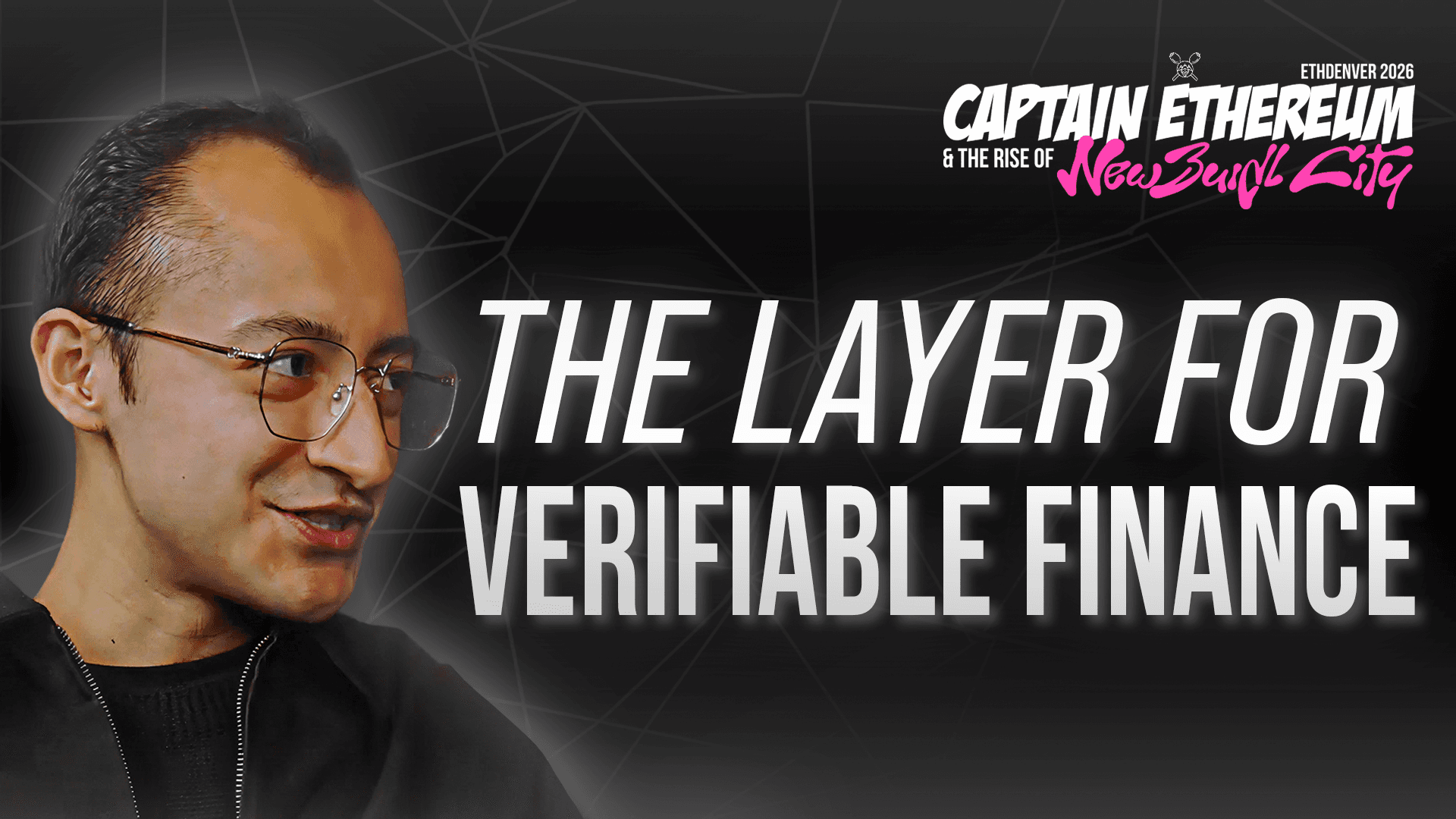
Nexus CEO Daniel Marin on Building Verifiable Finance
At ETH Denver, Nexus founder and CEO Daniel Marin laid out a bold thesis: the next generation of blockchain infrastructure should do more than scale transactions. It should become a sustainable economic engine for verifiable finance.
That vision blends zero-knowledge cryptography, a dual-core blockchain architecture, and native financial products designed for institutions, traders, and even autonomous AI agents. If you are following the future of blockchain architecture, this is a project to watch. For more perspectives on emerging tech moves, visit AI News and explore the wider Gen Z Media categories.
What Nexus Is Building
Nexus is positioning itself as a Layer 1 for verifiable finance. In simple terms, the protocol aims to combine general-purpose blockchain functionality with special-purpose financial infrastructure, all secured through zero-knowledge proofs and verifiable computation.
Marin described Nexus as a “next generation economic machine” built to support applications that need speed, composability, and real protocol-level revenue. The project’s core idea is that a blockchain should not just host financial apps; it should be designed to help those apps thrive economically.
Why Zero-Knowledge Technology Matters
Marin’s background in physics, mathematics, AI, and cryptography shaped Nexus’s technical direction. He explained that the company emerged from the rise of verifiable computation and zero-knowledge virtual machines, or ZKVMs.
The broader industry is already moving this way. Ethereum has also explored the role of ZKVMs in its long-term architecture, and institutions like the Ethereum Foundation continue to publish research on scaling and cryptographic verification. See the official Ethereum site at https://ethereum.org/ and the Ethereum Foundation at https://ethereum.foundation/.
According to Marin, the real opportunity is not just faster execution. It is building blockchain systems that can prove execution, support complex financial logic, and unlock new forms of economic coordination.
The Dual-Core Architecture
One of Nexus’s biggest differentiators is its dual-core design. Instead of forcing every function into a general-purpose EVM, Nexus separates the architecture into an EVM core and an exchange core that communicate with each other.
This approach is meant to solve a common problem in decentralized finance: most DEXs built fully inside the EVM do not feel like centralized exchanges. They often lack the low-latency execution, API structure, and feature parity that high-frequency traders expect. Nexus wants to narrow that gap without giving up decentralization, non-custodial access, or composability.
Marin compared the plan to what special-purpose financial systems can do when they are built directly into the chain rather than deployed as generic smart contracts on top of it.
The Exchange and Stablecoin Strategy
Nexus has already made progress on testnet, and Marin said the EVM mainnet is next, followed by the launch of its exchange main app. The exchange is expected to live tightly inside the chain’s architecture, not merely as an app layered on top.
The project also announced a stablecoin collaboration with M0, which Marin described as the native stablecoin of the Nexus Layer 1. This stablecoin is central to Nexus’s economic model because it can help the protocol capture value from TVL, while the exchange captures value from volume.
That combination matters. In Marin’s view, many blockchains accumulate activity without turning it into meaningful protocol revenue. Nexus wants to change that by aligning core network usage with sustainable economics.
Why Institutions and AI Agents Matter
Nexus is clearly targeting more than casual retail users. Marin said the protocol is being designed for high-frequency traders, professional capital markets participants, and institutional-grade financial use cases.
The timing also reflects a bigger trend: AI systems and autonomous agents are becoming faster decision-makers in financial environments. Those agents need infrastructure that can handle rapid execution, programmable rules, and multi-step financial workflows.
That is where a blockchain built for high-frequency payments, lending, perpetuals, and stablecoin settlement could have an edge. In Marin’s view, digital money and blockchain rails are the natural environment for machine-driven finance.
Protocol Economics and Monetary Policy
One of the most interesting parts of the interview was Marin’s emphasis on protocol economics. He said the two key metrics for a blockchain are TVL and volume: TVL measures how much capital is parked on-chain, while volume measures how much capital moves through the system.
On Nexus, those measurements are linked directly to how the protocol creates and captures value. The exchange is meant to monetize volume. The stablecoin and yield dynamics are meant to monetize TVL. Together, they support a kind of on-chain monetary policy.
Marin went as far as comparing a strong blockchain to a nation state: it should manage incentives, measure output, and cultivate a real economic base of applications that build value on top of the network.
Beyond Feature Parity With TradFi
In Marin’s view, the first milestone for crypto is feature parity with traditional finance. But that is not the end goal. Once blockchains can match TradFi on speed and usability, their native strengths — composability, programmability, and permissionless innovation — can produce entirely new financial primitives.
That includes tools such as flash loans, specialized lending structures, and composable markets that traditional finance cannot easily replicate. Hyperliquid was cited as proof that the design space for blockchain trading infrastructure is still expanding.
For builders and investors, the message is clear: the future of crypto infrastructure may belong to protocols that combine technical performance with economic sustainability. To explore related coverage, check out Finance and Events for more industry-focused stories.
What Comes Next for Nexus
Over the next six months to a year, Nexus appears focused on three priorities: launching the EVM mainnet, rolling out the exchange, and bringing the stablecoin online. Marin said these efforts are being developed in parallel, with the main objective of growing TVL and volume across the entire ecosystem.
If the project delivers on its roadmap, Nexus could become a notable example of a blockchain designed not just for scale, but for economic productivity. That combination of ZK infrastructure, embedded exchange functionality, and protocol-level revenue could make it stand out in the crowded Layer 1 landscape.
FAQ
What is Nexus? Nexus is a Layer 1 blockchain focused on verifiable finance, using zero-knowledge proofs and a dual-core architecture to support advanced financial applications.
Why is the exchange built into the chain? The exchange is designed to deliver better performance, lower latency, and feature parity with centralized exchanges while remaining decentralized and non-custodial.
What role does the stablecoin play? The stablecoin is meant to support protocol economics by helping Nexus capture value from TVL and create a stronger on-chain monetary policy.
Who is Nexus built for? The protocol targets high-frequency traders, institutions, developers, and AI-driven financial agents.
About

Featured Posts



Explore Topics