How Resilient Networks Solves Signal Failure at Big Events
Resilient Networks is building peer-to-peer connectivity for crowded festivals, conferences, and Web3 events, helping attendees stay connected when cellular networks fail.

Genzio
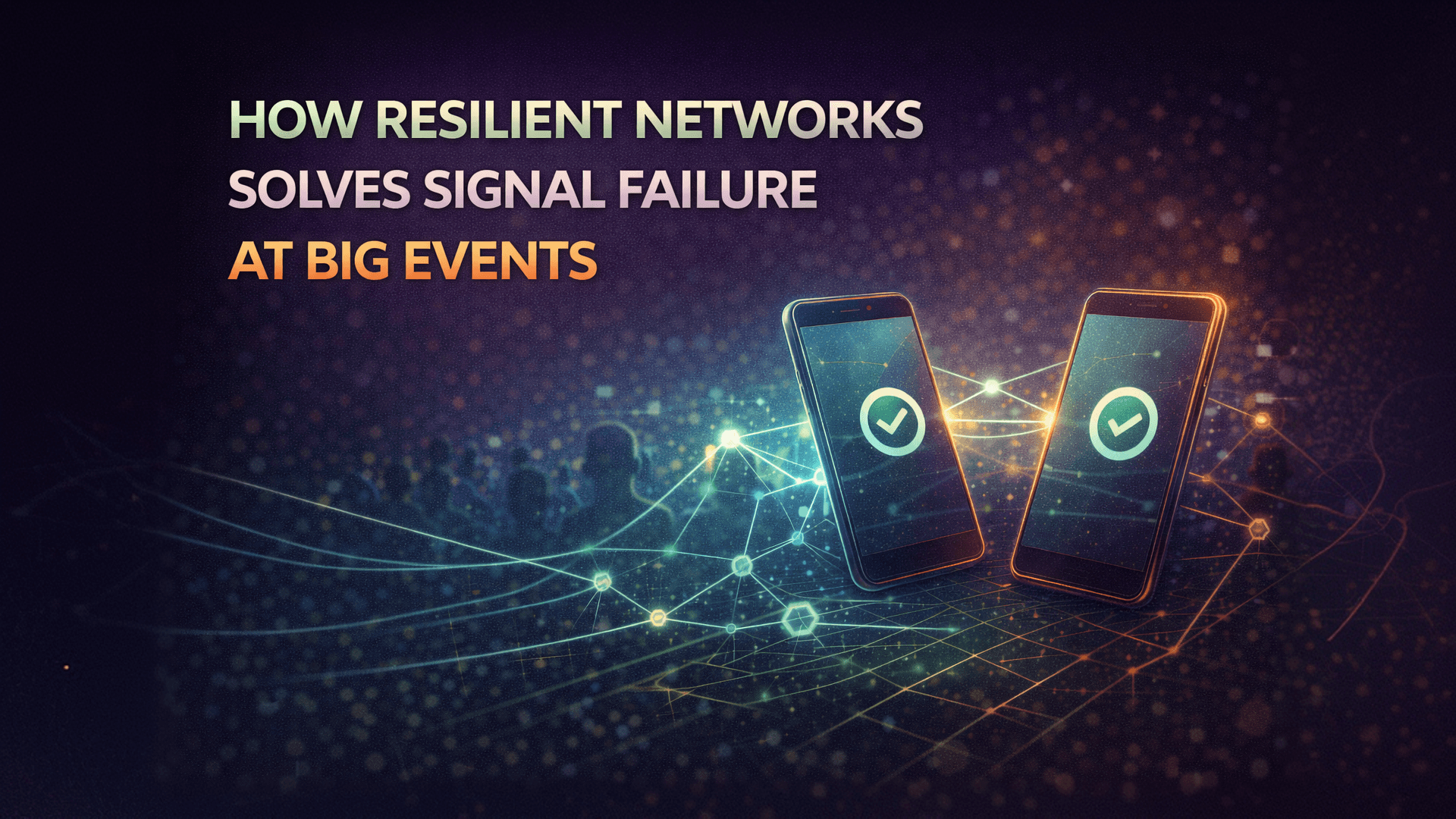
How Resilient Networks Solves Signal Failure at Big Events
At crowded festivals, conferences, and clubs, one problem shows up again and again: the network breaks down right when people need it most. Resilient Networks is taking aim at that challenge with a peer-to-peer communication platform designed for high-density gatherings, where centralized networks often struggle.
The company’s approach is especially relevant for event organizers and Web3 communities that value privacy, resilience, and real-time connection. If you want a broader look at how this kind of innovation fits into the live event ecosystem, explore the latest coverage on events and experiences and emerging technology trends.
What Resilient Networks is building
Resilient Networks is developing a decentralized connectivity layer that lets phones connect through a peer-to-peer network instead of relying only on overloaded cellular infrastructure. In practical terms, that means attendees can still send messages, find friends, and stay coordinated when the crowd becomes too dense for normal service.
The team describes the problem as a physics challenge for centralized systems. In a packed venue, signals get crushed by density. Their solution uses nearby devices to help relay communication, creating a more resilient experience for users.
Peer-to-peer messaging in crowded environments
Privacy-preserving communication
Proximity-based friend finding
White-labeled deployments for organizers
Why this matters for festivals and conferences
Anyone who has tried to meet friends at a major festival knows how frustrating it is when group chats fail and calls won’t go through. Resilient Networks is aiming to solve that exact pain point, with use cases that extend from large music festivals to Web3 conferences and sporting events.
The founders specifically mentioned interest in deploying the product for events like Burning Man and for conference environments where attendees need fast, reliable coordination. Their model also includes working directly with organizers, making it possible to ship a branded app with the connectivity SDK embedded underneath.
For event teams looking at new ways to improve attendee experience, this sits at the intersection of live production and software infrastructure. You can see more related coverage in the Genzio Media category hub and the entertainment section.
The Web3 angle
Beyond logistics, the project fits naturally into Web3 culture. Decentralization, user control, and community-first tooling are core ideas in the crypto and blockchain world, and Resilient Networks is applying those ideas to real-world communication.
The team said they are actively exploring Ethereum-specific applications and white-label implementations for organizers. That makes the product more than just a consumer app; it becomes a flexible layer that can sit beneath event experiences and support large communities.
From deep tech to live event infrastructure
The founders’ background helps explain the product direction. One founder has worked across Siri, smart home tech, and Meta, while also bringing deep engineering offshoots into the current build. The other has spent years thinking through networking problems, including early experiments with FireChat-style concepts and protocol research.
That mix of applied research and hands-on event awareness is important. Building a usable mesh or peer-to-peer system is one thing. Making it work in a real crowd, under real pressure, is another.
For readers interested in the technical side of decentralized systems, the official Web3 foundation materials at Ethereum.org and networking research from MIT offer useful context on how distributed technologies are shaping new products.
What’s next for the company
Resilient Networks says it is already working through a busy pipeline of deployments and pilots. The company is testing in extremes: extremely dense environments like clubs and festivals, and wide-open events where coverage can be just as difficult to manage.
If the solution works across those settings, it could become a powerful event infrastructure tool. That is the real promise here: not just a better chat app, but a communication layer that organizers can rely on when traditional networks fail.
Frequently asked questions
What problem does Resilient Networks solve? It helps people stay connected at crowded events where standard cellular networks become unreliable.
Is the product only for Web3 events? No. While it fits Web3 culture well, it is also designed for festivals, clubs, sporting events, and other large gatherings.
Does it support privacy-preserving communication? Yes. The founders highlighted privacy as a key part of the peer-to-peer approach.
How can event organizers use it? The company offers white-label deployment and SDK integration so organizers can build the network into their own branded experience.
About

Featured Posts



Explore Topics




Related Post

A look at how Crypto Mondays at East Denver highlights the enduring value of in-person crypto events, student participation, and the community builders keeping the ecosystem connected.