How Human API Lets AI Agents Hire Humans
Human API is building infrastructure for AI agents to hire humans for real-world tasks, starting with audio data to improve voice AI, multilingual coverage, and the last mile of automation.

Genzio
How Human API Lets AI Agents Hire Humans
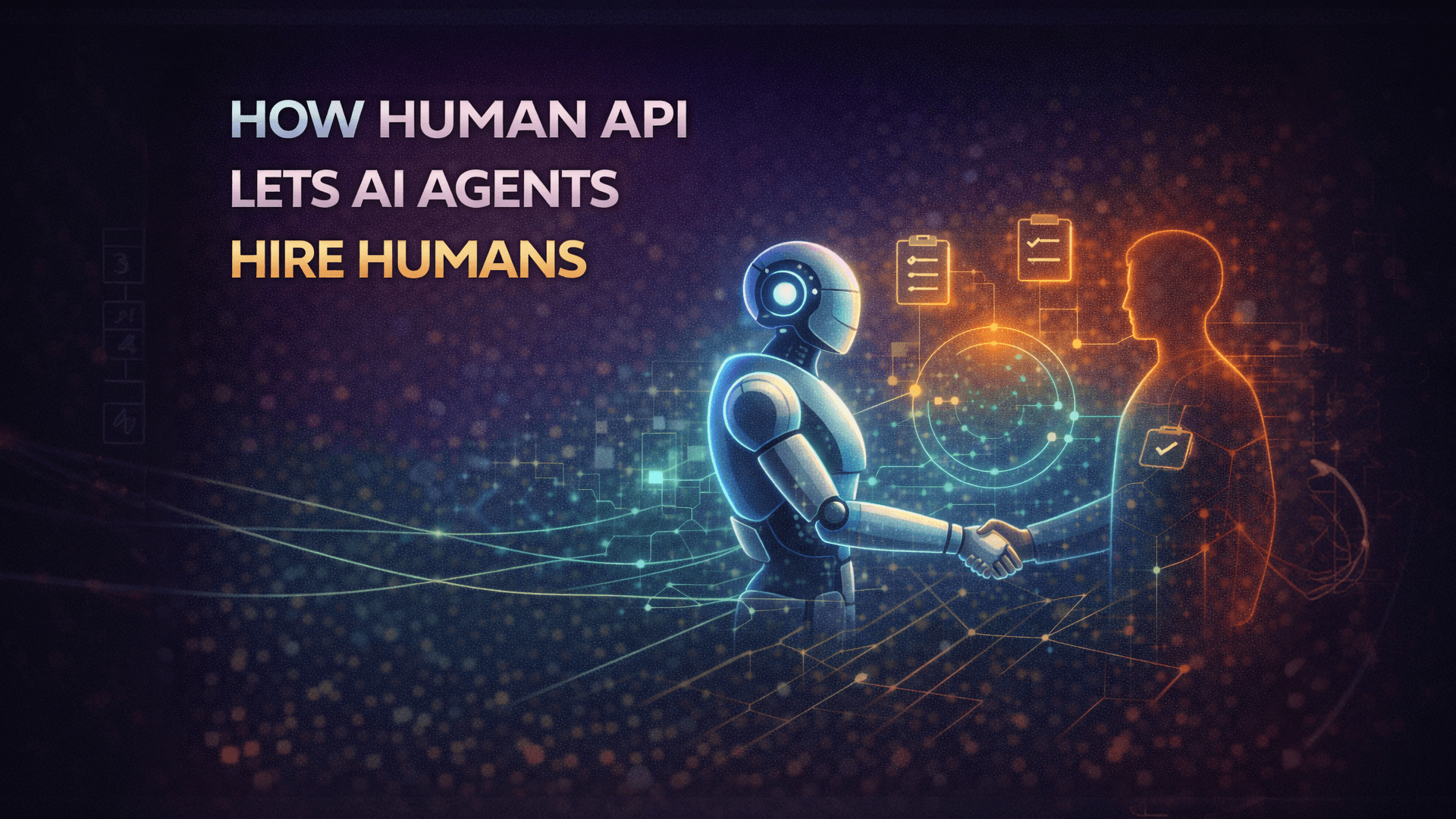
Human API is building a new kind of infrastructure for the AI era: a platform where AI agents can hire humans to complete tasks that still require physical presence. In a conversation at ETH Denver, founder Sydney Huang explained how the company is tackling the “last mile” problem in AI by starting with something surprisingly accessible and valuable: audio data.
This approach sits at the intersection of agentic AI, data collection, and the future of work. It also reflects a larger industry trend: as AI becomes more capable, the bottlenecks are shifting from reasoning to real-world execution, multilingual coverage, and high-quality human input.
For more coverage on emerging AI products and founders, see our AI news section and Genzio Media.
What Human API Is Building
Human API is designed to let AI agents outsource tasks to humans. That may sound futuristic, but the logic is straightforward: many AI systems can already draft, plan, and analyze, yet they still struggle when a task requires a human voice, a physical action, or local context.
Examples include collecting field data, completing a delivery, recording speech samples, or gathering sensor data for an AI scientist. Human API’s starting point is data collection, especially audio, because it is one of the fastest ways to improve voice AI and expand model coverage across accents, dialects, and languages.
The Last Mile Problem in AI
Sydney Huang describes the company’s core idea as solving the “last mile” problem. In other words, AI may get 90 percent of the way through a workflow, but it often stalls at the final step. It might need a human to verify an action, enter a payment detail, or complete an offline task that software alone cannot finish.
That gap is becoming more important as agents become more autonomous. Instead of forcing agents to fit every human-made interface, Human API wants to build an interface that is native to agents from the ground up.
Why Audio Is the First Wedge
Human API is focusing first on audio because voice AI still lags behind text, image, and video systems. Audio carries a lot of information in a compact form: tone, accent, rhythm, background noise, and language variation all matter. High-quality speech data is especially important if models are expected to work reliably across real-world conditions.
That need is even more obvious in multilingual and multicultural contexts. Huang pointed to examples like Arabic dialect families and code-switching in places such as Singapore, where people naturally mix languages. This kind of coverage is essential for building voice AI that feels useful, natural, and globally relevant.
For broader context on AI research and language technology, helpful references include MIT and Stanford University.
How the Platform Could Change Work
One of the most interesting parts of Human API’s model is how it reframes work. Instead of the traditional job application process, contributors see transparent tasks and can choose whether to take them. Huang argued that this makes the experience clearer than a typical hiring pipeline, where candidates often do not know where they stand.
The platform also creates a flexible way for people to earn money by completing small, task-based jobs. In the early tests, the team found that people were willing to do quite a bit for a reward, especially when the process was simple and the value exchange was clear.
Transparent task selection
Flexible contributor schedules
Global participation through data collection
Potential earnings tied to useful AI training work
From Crypto Infrastructure to AI Agents
Sydney Huang’s background helps explain the company’s direction. Before Human API, she worked in finance and venture capital, then moved deeper into crypto and infrastructure through Eclipse, an Ethereum Layer 2 project. That experience shaped her thinking around efficiency, throughput, and parallelism.
Human API applies those same ideas to AI agents. Unlike humans, agents can work in parallel, splitting a task into thousands of subtasks at once. That makes them a natural fit for an infrastructure layer that can coordinate human participation at scale.
If you are interested in the business and platform side of this shift, browse finance coverage as well as culture stories on how technology changes human behavior.
Why This Matters for the Future of AI
Human API is not really about replacing people. In Huang’s view, AI is more likely to change the shape of work than eliminate it outright. That perspective echoes how earlier technology waves created new roles, new workflows, and new kinds of demand rather than simply removing labor from the economy.
The bigger opportunity may be in building the missing infrastructure around AI agents: systems that make it easier to request human help, gather better data, and complete tasks across the physical and digital worlds. As agentic systems mature, that infrastructure could become just as important as the models themselves.
What Comes Next
For now, Human API is focused on launching its app and onboarding contributors through its application process. The longer-term roadmap includes broader data modalities, including video and robotics-related data. That would allow the platform to support more use cases, from household task demonstrations to machine learning datasets for embodied AI.
As the AI ecosystem continues to evolve, the companies that win may be the ones that make AI more practical in the real world. Human API is betting that the future belongs to agents that can delegate, coordinate, and learn with human help.
Learn more about new startup launches and industry conversations in our events coverage.
FAQ
What does Human API do?
Human API is building a platform that allows AI agents to hire humans for tasks that need physical presence or real-world input.
Why is the company starting with audio data?
Audio is easy for people to contribute and is especially valuable for improving voice AI across languages, accents, and dialects.
Is Human API about replacing human jobs?
No. The company’s view is that AI will change how jobs look and create new kinds of work rather than simply eliminate human labor.
About

Featured Posts





Explore Topics