HealMint AI Wants to Pay You for Your Health Data
HealMint AI is building an AI-powered health ring that tracks wellness data, personalizes coaching, and uses blockchain to let users control and monetize their health information.
Genzio
HealMint AI Wants to Pay You for Your Health Data
At ETH Denver, HealMint AI founder Mengfan Zhang introduced a bold idea: a smart ring and AI platform that helps people understand their health while giving them more control over their data. The startup sits at the intersection of wearable tech, precision medicine, and blockchain, with a pitch designed for the future of digital health.
For readers following emerging AI companies, this is a strong example of how artificial intelligence is moving beyond chatbots and content tools into healthcare infrastructure. For more coverage of similar innovations, visit our AI news coverage or explore all categories.
What HealMint AI Is Building
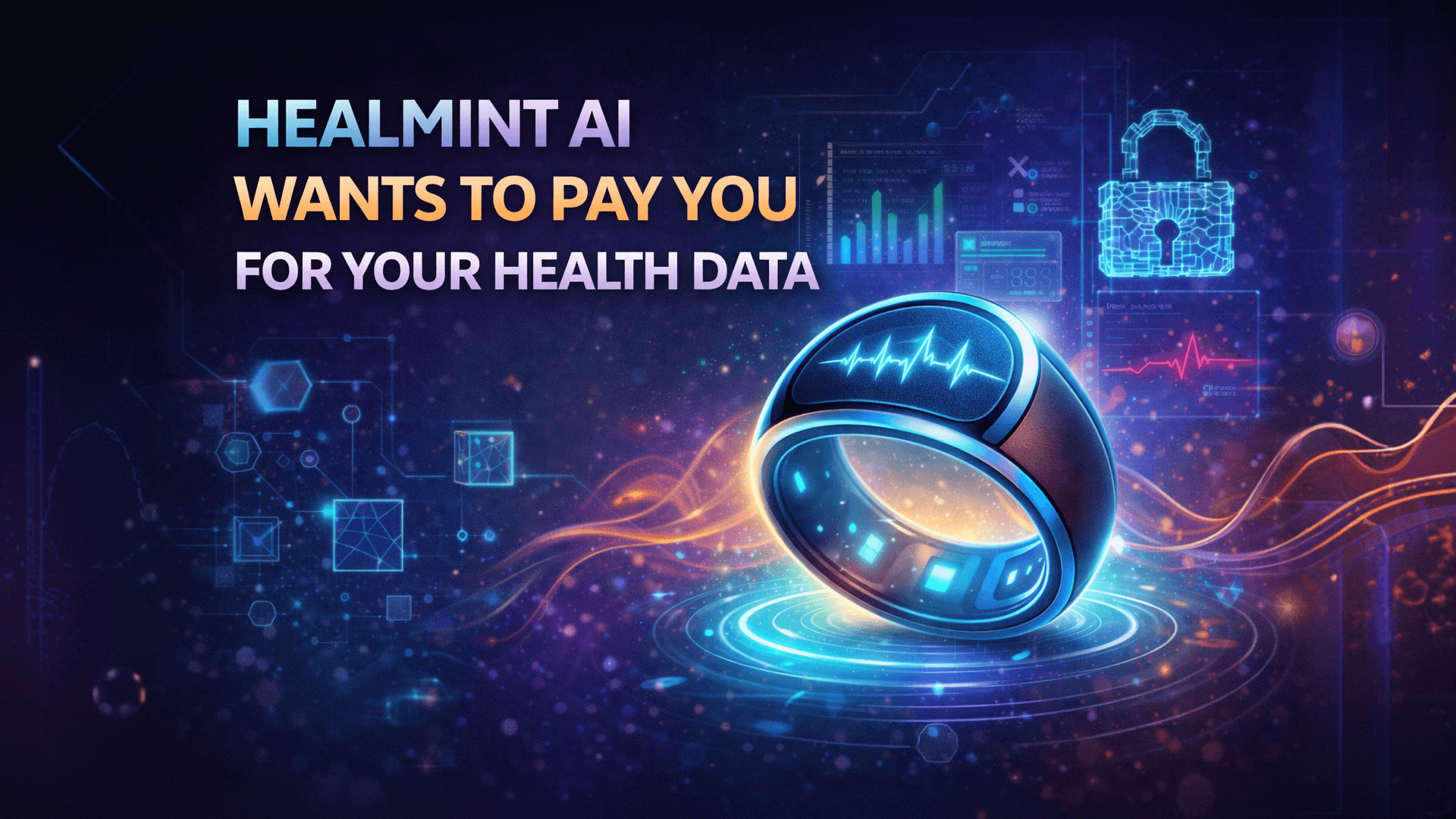
HealMint AI combines a health-tracking ring with software that turns wellness data into personalized recommendations. The ring is designed to collect signals such as sleep, exercise, and body temperature, then unify that information with other sources like medical history, lab results, and genomics data.
The goal is to create a more complete picture of a person’s health. Instead of offering generic advice, the platform aims to generate a personalized wellness plan that feels closer to precision medicine than a traditional fitness app.
Wearable health tracking through a smart ring
AI-powered personal coaching
Broader health data integration
Support for more individualized recommendations
Why Blockchain Matters Here
HealMint AI’s Web3 angle is not just about branding. According to Zhang, blockchain is meant to help users manage consent, track where data goes, and understand how it is used. That transparency is a major selling point in an industry where health data can move through different intermediaries without much visibility for the person who generated it.
The company says its model is designed so users can approve data sharing and receive a fair share of the value created. In practice, that means health data could be bundled, sold ethically to research or pharmaceutical buyers, and the proceeds distributed back to users.
That concept aligns with broader conversations about data ownership and digital rights, which are increasingly important in AI and healthtech. For a wider look at related industry news, check finance and culture stories that track how technology is reshaping everyday life.
How the Business Model Works
The startup is positioning the product as accessible. Zhang said the ring is expected to cost around $200, with basic software included. More advanced features may eventually require a subscription, especially when additional data sources are used to improve the AI model.
The other part of the model is data monetization. Users may be able to earn money when they opt in to share health information. That income could help offset software fees and reduce the feeling that consumers are paying to generate value for large companies without any return.
It is a compelling idea, but also one that depends on trust. For any health AI product, privacy, security, and user consent are not optional — they are the foundation.
Safety and Medical Responsibility
Zhang was clear that HealMint AI should not replace doctors. The team says its AI is designed to be careful, moderate, and transparent about its limits. If the system detects a potential risk, the recommendation is to consult a physician rather than treat the output as a diagnosis.
That approach is important because healthcare AI can be useful and dangerous at the same time. A helpful home-care assistant can remind users about patterns in sleep or stress, but false confidence in automated advice can create real harm. The company says it is working with medical advisors, including physicians tied to Stanford Medicine, to keep the product grounded in responsible use.
For more context on the healthcare and technology landscape, authoritative resources from the World Health Organization and the U.S. Food and Drug Administration are useful references on digital health and software-based medical tools.
Why HealMint AI Stands Out
The smart-ring market already has major names, but HealMint AI is trying to differentiate itself by combining hardware, AI, and data ownership in one product. Zhang also pointed to her background in healthcare and Web3, along with a team that includes blockchain engineering, large language model experience, and medical advisors.
That mix matters. In a crowded AI market, products with a clear use case and credible domain expertise have a better chance of earning user trust. HealMint AI’s pitch is not only about better personalization — it is about changing who benefits from health data in the first place.
What Comes Next
The company recently launched a preorder campaign in Silicon Valley, with product delivery expected in 6 to 12 months depending on manufacturing and software progress. That timeline suggests the product is still early, but the vision is clear: make health data more transparent, more useful, and more rewarding for the person wearing the device.
If HealMint AI can balance personalization, privacy, and clinical responsibility, it could become part of a bigger shift in how people interact with AI-powered wellness tools.
FAQ
Is HealMint AI a medical device? The company presents it as a wellness and health data platform, not a replacement for medical care. Users are encouraged to consult doctors for any health concerns.
Can users really earn money from data sharing? That is the company’s stated model. Users must consent before sharing data, and revenue is intended to be distributed back to them.
When will the ring be available? HealMint AI has said preorder customers can expect delivery in roughly 6 to 12 months.
About

Featured Posts


Explore Topics